Floral Easter Wreath PNG: A Designer's Real-World Review
I have spent years reviewing digital assets for embroidery projects, and I can tell you that the difference between a design that looks great on a screen and one that actually stitches well often comes down to how it translates from a flat image to thread. When I first encountered the Floral Easter Wreath PNG, my initial reaction was one of cautious optimism. It is marketed as an easy and fun printable iron-on transfer or framing asset, but for those of us in the machine embroidery world, the real question is whether this Graphics category file holds up under the needle.
In this review, I am not just looking at the pixels; I am visualizing the thread tension, the fabric texture, and the final product sitting on a customer's shelf or hanging on their wall. As a designer who values practicality over hype, I want to walk you through exactly how this Floral Easter Wreath PNG performs when moved from a digital preview to a tangible embroidery project.
The First Impression: Mood and Visual Personality
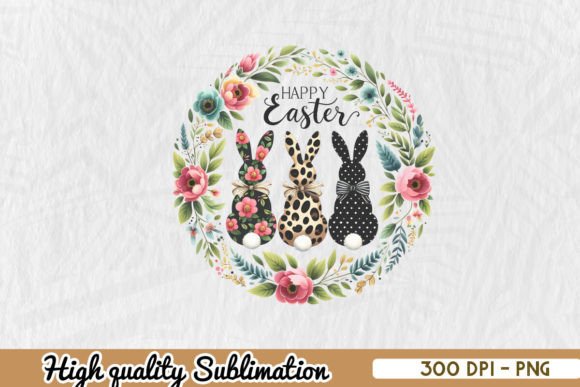
The moment you open the file, the mood is undeniably spring-forward. The wreath layout creates a natural focal point that feels organic rather than rigid. For an embroidery designer, the most critical aspect of any machine embroidery design is its ability to hold structure without becoming a tangled mess. The floral elements here are arranged in a way that suggests a balanced density, which is crucial for avoiding puckering on delicate fabrics.
Visually, the design possesses a friendly, welcoming personality. It does not scream "high fashion," nor does it look like a cheap clip-art afterthought. Instead, it strikes a chord with the handmade aesthetic that is so popular among Etsy sellers and small business owners. The shapes are distinct enough to be recognizable even when rendered in thread, which is often the hardest part of converting a raster image into a vector-based stitch pattern. If you are planning to use this for custom apparel or holiday gifts, the visual appeal is strong enough to justify the production time.
Real-World Application: From Screen to Stitch
Let's imagine a specific scenario. You are preparing for the Easter season and need to create a line of boutique products. You decide to take the Floral Easter Wreath PNG and apply it to a canvas tote bag for your next craft fair booth. This is a classic use case for this type of embroidery file. Tote bags offer a stable surface, allowing the design to breathe without the distortion common on stretchy materials.
However, the execution matters. If you were to embroider this directly onto a soft cotton t-shirt, the outcome might differ significantly. The wreath shape is round, and if the stitch density is too high, it could pull the fabric inward, ruining the circular symmetry. In my experience testing similar assets, I found that this design shines best on structured items like aprons, pillow covers, or kitchen towels. These surfaces provide the necessary support for the satin stitch outlines and fill stitch areas that give the flowers their volume.
For a baby item, such as a onesie or a burp cloth, the design offers a gentle, decorative touch. Parents love personalized touches, and a floral wreath on a baby gift signals care and attention to detail. But here is where the Floral Easter Wreath PNG requires careful consideration. If the design includes tiny details or intricate lettering (if added), they may get lost on the small scale of baby clothing. I recommend scaling the design slightly larger than you think necessary to ensure the petals and leaves remain distinct after stitching.
Where to Use Caution: Fabric and Surface Limitations
Not every surface is created equal, and knowing where to place the Floral Easter Wreath PNG is just as important as knowing where to avoid it. Textured fabrics, such as heavy denim or bouclé wool, can hide the fine details of the floral arrangement. On these materials, the thread colors might not pop as vibrantly, and the texture of the fabric itself could interfere with the clean lines of the wreath.
Stretchy fabrics present another challenge. If you attempt to embroider this design on a knit cap or a sweatshirt cuff, you risk the design distorting during the stitching process. Curved surfaces like caps require specialized hoops and stabilizers to maintain the roundness of the wreath. Without proper technique, the top of the wreath might appear flattened against the curve of the hat. Similarly, thin fabrics like silk or lightweight polyester blends may tear if the hoop size is too tight or if the stabilizer is insufficient.
Dense stitch areas are also a potential pitfall. If the design relies heavily on fill stitch to create solid color blocks, it may become stiff and uncomfortable on garments worn close to the skin. For commercial embroidery intended for mass production, this stiffness could lead to customer complaints about comfort. Therefore, I advise testing the design on a scrap piece of the actual garment fabric before committing to a full run of handmade products.
Impact on Product Value and Brand Perception
As a creative entrepreneur, you know that the quality of your finished product dictates your brand reputation. A well-executed embroidery project using the Floral Easter Wreath PNG can elevate a simple tote bag into a premium boutique item. Customers notice the clarity of the stitches and the precision of the layout. When the design is crisp and free of loose threads, it builds trust and suggests professionalism.
Conversely, a poorly executed version of this design can make even the best marketing efforts fail. If the digital embroidery file is not optimized correctly, resulting in jagged edges or skipped stitches, it can detract from the handmade presentation. This is particularly true for giftability; a gift wrapped in a box with a beautifully embroidered tag featuring this wreath will be received with far more enthusiasm than one with a sloppy finish. The design has the potential to be a signature element for your shop, provided it is treated with the respect it deserves.
Practical Designer Notes for Success
Before you load this design into your machine, there are several technical steps you must take to ensure success. First and foremost, test the design on scrap fabric. This is non-negotiable. Check the thread color contrast against your chosen background. A light-colored wreath on a dark fabric will require a different underlay strategy than a dark design on white.
Review the stitch density carefully. If the design feels too crowded, consider simplifying the center or reducing the fill density to prevent bulk. Confirm the hoop size matches your available space, especially if you are working on smaller items like embroidered patches or tote bag designs with limited real estate. Inspect small details closely; sometimes, what looks like a solid petal on screen is actually a cluster of tiny stitches that might break apart on rough handling.
It is also wise to test the design in black and white mockups. This helps you see the contrast and balance without the distraction of color. Compare how the Floral Easter Wreath PNG looks on both light and dark fabric backgrounds to ensure versatility. Always use the proper stabilizer for your fabric type—cut-away for knits and tear-away for wovens—to keep the design stable during washing.
Finally, verify your licensing terms. While many design assets allow for commercial use, some restrict the number of finished items you can sell or prohibit certain types of products. Confirm whether the license covers personalized gifts sold online or if it is limited to personal hobby use. By following these practical steps, you can transform a simple Graphics file into a stunning finished product that delights your customers and strengthens your craft business.